
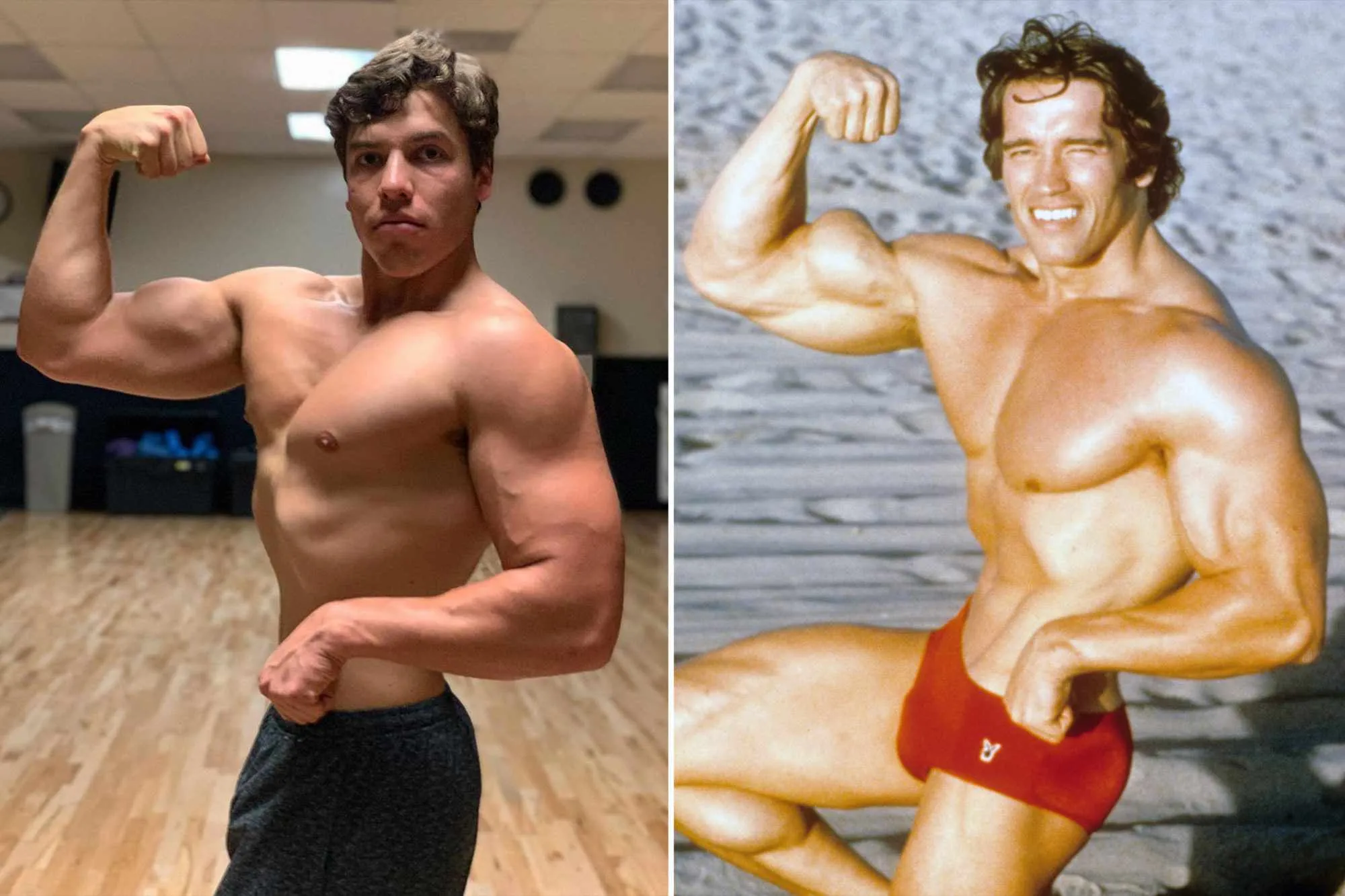
When it comes to legendary bodybuilding exercises, very few movements carry the same reputation as the Arnold press. Named after the seven-time Mr. Olympia champion Arnold Schwarzenegger, this shoulder-building powerhouse has become a staple in gyms worldwide for one simple reason: it works.
It is more than just a variation of the dumbbell shoulder press. Adding a smooth rotational component increases muscle activation, challenges stability, and helps develop round, complete shoulders that stand out from every angle.
Whether your goal is bigger delts, improved upper-body strength, or a more balanced physique, it deserves serious attention.
In this complete guide, we’ll explore exactly what it is, how it works, the muscles it targets, its key benefits, proper technique, common mistakes, variations, and how to program it into your routine safely and effectively.
What is Arnold Press
Shoulders are one of the most visually defining muscle groups in the upper body. Well-developed delts create the appearance of a broader frame, stronger posture, and a powerful athletic look.
But building shoulders isn’t always easy. The shoulder joint is complex, highly mobile, and prone to injury if trained incorrectly. That’s why exercises that combine effectiveness with control are so valuable.
The Arnold press stands out because it:
- Engages all three heads of the deltoid
- Provides a longer range of motion than standard presses
- Builds muscle size while improving coordination
- Adds a unique rotational challenge that stimulates growth
This is exactly why it remains one of the most respected shoulder movements in bodybuilding history.
What Is the Arnold Press?
It is a dumbbell overhead pressing exercise that combines a traditional shoulder press with a controlled rotation of the arms.
Unlike a standard dumbbell press, where the palms face forward throughout the movement, it begins with your palms facing inward toward your chest.
As you press upward, you rotate your wrists outward until your palms face forward at the top of the lift.
This creates a corkscrew-like motion that increases shoulder activation and forces the deltoids to work through a fuller movement path.
In simple terms:
- Standard shoulder press = straight press
- Arnold press = press + rotation + increased tension
That small adjustment makes a big difference.
History and Origin of the Arnold Press
Arnold Schwarzenegger didn’t just dominate bodybuilding—he helped shape modern training itself.
During the golden era of bodybuilding, Arnold constantly experimented with exercises that could improve muscle development. His goal wasn’t just strength, but complete aesthetics: symmetry, fullness, and balance.
Arnold noticed that traditional presses emphasized mainly the front and side delts. To stimulate the rear delts more effectively and increase overall shoulder engagement, he added a rotational motion to the press.
The result was the Arnold press—a movement that quickly became famous for building broad, rounded shoulders.
Decades later, it remains one of the most iconic exercises in bodybuilding culture.
How the Press Works (Movement Mechanics)
The effectiveness of the Arnold press lies in its mechanics.
Starting Position
- Dumbbells are held in front of the shoulders
- Palms face inward toward the chest
- Elbows are bent and slightly tucked
Pressing Phase
- Dumbbells travel upward
- Arms rotate outward gradually
- Shoulders stay engaged throughout
Top Position
- Arms extend overhead
- Palms face forward
- Deltoids are fully contracted
Lowering Phase
- Dumbbells descend slowly
- Rotation reverses back inward
- Muscles remain under tension
Because the movement includes rotation, it naturally increases time under tension and demands more control compared to a standard press.
Muscles Worked in the Arnold Press
One of the biggest advantages of it is its ability to recruit multiple muscles.
Primary Muscles: Deltoids
The shoulder muscle is made up of three heads:
Anterior Deltoid (Front Delt)
This head is heavily involved during the initial pressing phase and contributes significantly to shoulder size.
Lateral Deltoid (Side Delt)
Responsible for shoulder width and the “capped” look, the lateral delt becomes more active as the arms rotate outward.
Posterior Deltoid (Rear Delt)
The rear delt is often undertrained, but the rotational component of the Arnold press helps activate it more than standard pressing movements.
Secondary Muscles
Triceps
The triceps assist with elbow extension during the overhead press.
Trapezius
The traps stabilize the shoulders and support the weights near lockout.
Upper Chest
Depending on your torso angle, the upper chest may assist slightly, especially if you lean back.
Stabilizing Muscles
- Rotator cuff muscles
- Upper back stabilizers
- Core muscles (especially standing variation)
This makes the Arnold press a compound movement with broad upper-body benefits.
Benefits of the Arnold Press
It offers several unique advantages for shoulder development.
Full Deltoid Engagement
Unlike many presses that emphasize only the front delts, the Arnold press recruits all three delt heads.
This results in:
- More balanced shoulder growth
- Improved symmetry
- A fuller, rounder appearance
Increased Range of Motion
Because the dumbbells start in front of the chest rather than beside the shoulders, the movement path is longer.
More range of motion means:
- Greater stretch
- Stronger contraction
- Higher hypertrophy potential
Increased Time Under Tension of Arnold Press
The rotation forces slower, more controlled movement.
Muscles grow best when they experience sustained tension, making this press ideal for hypertrophy-focused lifters.
Improved Shoulder Mobility and Coordination
The rotational element encourages better joint control and coordination.
Over time, this can improve:
- Pressing stability
- Shoulder mechanics
- Movement efficiency
Strong Carryover to Other Lifts
Stronger shoulders help with:
- Bench pressing
- Overhead pressing
- Pull-ups and rows
- Athletic pushing movements
The Arnold press builds both strength and muscle control.
Arnold Press vs. Standard Shoulder Press
Many lifters wonder which is better.
Key Differences
| Feature | Shoulder Press | Arnold Press |
| Rotation | No | Yes |
| Muscle Activation | Front + side delts | All three delt heads |
| Weight Potential | Heavier loads | Moderate loads |
| Range of Motion | Shorter | Longer |
| Goal | Strength focus | Hypertrophy + balance |
Which One Should You Choose?
- Use standard presses for maximal strength
- Use presses for shoulder size, shape, and control
Both have a place in a complete program.
How to Do the Arnold Press Correctly
Proper form is essential.
Step-by-Step Technique
- Sit on a bench with back support or stand upright.
- Hold dumbbells in front of your shoulders, palms facing inward.
- Brace your core and keep your spine neutral.
- Begin pressing upward while rotating your wrists outward.
- Continue until arms are extended overhead, palms facing forward.
- Pause briefly at the top.
- Lower slowly, reversing the rotation back inward.
- Repeat for controlled reps.
Recommended Sets and Reps
- Muscle growth: 3–4 sets of 8–12 reps
- Endurance: 2–3 sets of 12–15 reps
- Strength (moderate): 4 sets of 6–8 reps
Choose weights that allow perfect control.
Common Mistakes to Avoid in Arnold Press
Even experienced lifters make errors with this movement.
| Common Mistake | Why It’s a Problem |
| Using Too Much Weight | The added rotation makes the lift more difficult, and heavy dumbbells often ruin form. |
| Rushing the Movement | Fast reps reduce muscle tension and increase the risk of shoulder injury. |
| Flaring the Elbows | Elbows should stay slightly forward—wide flaring places stress on the shoulder joint. |
| Overarching the Lower Back | Poor core control can cause excessive leaning, leading to lower-back strain. |
| Incomplete Rotation | The rotation is essential for full delt activation—skipping it reduces effectiveness. |
Safety Tips and Injury Prevention
Because shoulders are vulnerable, safety matters.
Warm Up Properly
Before pressing, perform:
- Arm circles
- Band pull-aparts
- Light dumbbell presses
Control the Tempo
Slow reps protect the rotator cuff.
Avoid Locking Out Aggressively on Arnold Press
Keep slight tension at the top.
Know Your Mobility Limits
If rotation causes discomfort, reduce range or use alternatives like landmine presses.
People with prior shoulder injuries should consult a professional before attempting the press.
How to Add the Arnold Press Into Your Routine
It works best as a primary shoulder builder.
Sample Shoulder Workout
- Arnold Press – 4×8–12
- Dumbbell Lateral Raise – 3×12–15
- Rear Delt Fly – 3×15
- Face Pulls – 3×12–15
- Shrugs – 3×10–12
Frequency
Train shoulders 1–2 times per week, allowing recovery between sessions.
Who Should Do the Arnold Press?
It is ideal for:
- Bodybuilders seeking delt size
- Lifters wanting balanced shoulder development
- Athletes needing upper-body stability
- Intermediate trainees progressing beyond basic presses
It may not be suitable for:
- Those with shoulder impingement
- Severe mobility limitations
- Beginners lifting too heavy, too soon
Final Thoughts:
The Arnold press is one of the most effective shoulder exercises ever created. Its combination of rotation, pressing strength, and full delt engagement makes it a superior hypertrophy movement for anyone chasing bigger shoulders.
With proper form, controlled progression, and smart programming, this exercise can help you build:
- Wider delts
- Better posture
- Stronger overhead pressing ability
- Balanced shoulder development
If you want shoulders worthy of bodybuilding’s golden era, the Arnold press is a must.
 AdpharmaConsultant