
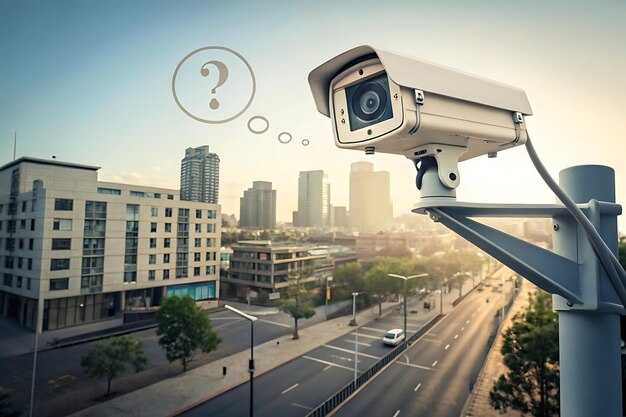
We’ve all had that fleeting thought while walking through a grocery store or a park: “Is that thing watching me right now?” In 2026, it’s hard to go a block without passing a lens. Whether it’s a neighbor’s video doorbell or a high-tech 360 security camera perched atop a city light pole, the “eyes” are everywhere.
It brings up a massive question for homeowners and business owners alike: Are surveillance cameras an invasion of privacy? The answer isn’t a simple “yes” or “no.” It’s a delicate balance between our desire for safety and our fundamental right to be left alone.
The Legal Side: Where Can You Point Those Lenses?
In the U.S., the law generally follows a concept called “Reasonable Expectation of Privacy.” If you are standing in a public park, on a sidewalk, or in a store, you generally don’t have a legal expectation of privacy.
That’s why businesses can legally install PTZ security cameras to monitor their property. However, there are “red zones” where cameras are strictly forbidden, such as:
- Restrooms and Locker Rooms: This is a universal “no-go” for obvious ethical and legal reasons.
- Residential Bedrooms/Bathrooms: Even in your own home, recording guests in private areas without their consent can land you in serious legal hot water.
- Neighboring Windows: You can point a camera at your own driveway, but if you purposefully angle a high-zoom PTZ security camera to look directly into your neighbor’s living room, you’ve crossed the line from “security” into “harassment.”
The Ethical Side: “Just Because You Can, Doesn’t Mean You Should”
Beyond the law, there is the “neighborly” factor. A 360-degree security camera is a powerful tool; it can see in every direction simultaneously, leaving no blind spots. While this is amazing for catching a catalytic converter thief, it can also make your neighbors feel like they are living in a fishbowl. Ethical surveillance is all about transparency.
- Signage: A simple “Security Cameras in Use” sign does wonders. It informs people they are being recorded, which actually acts as a better deterrent than the camera itself!
- Data Security: If you’re recording video, you are responsible for it. Ensuring your NVR is password-protected and not “leaking” footage to the cloud is a part of respecting privacy.
The Tech Factor: Why Modern Cameras are Different
In the past, cameras were static. They pointed at one spot, and that was it. Today, the hardware is much more “active.”
PTZ cameras are a great example. Because they can move, tilt, and zoom from a remote app, they feel more “intrusive” to the average person. If a neighbor sees a camera lens physically turn to follow them as they walk their dog, it feels personal.
On the flip side, a 360-degree security camera (often called a fisheye or multi-sensor camera) is actually more “honest.” It sees everything at once without moving, which can sometimes feel less like “stalking” and more like general area monitoring.
Finding the Middle Ground
The goal of a good security system isn’t to spy; it’s to protect. To stay on the right side of the privacy debate, follow the “Rule of Intent”:
- Is the camera there to protect a specific asset?
- Are you being open about its presence?
- Is the footage being handled securely?
If the answer to all three is “yes,” you’re likely using your tech responsibly.
Final Thoughts
So, are surveillance cameras an invasion of privacy? No. Surveillance doesn’t have to be a “dirty word.” When used correctly, these tools save lives and protect livelihoods. By being mindful of where you point your lenses and how you store your data, you can keep your property safe without making your community feel watched.
FAQs
1. Can my neighbor legally point a camera at my house?
Yes, as long as it is capturing “plain view” areas like your front yard or porch. They cannot legally record areas where you have a high expectation of privacy, like a bedroom window.
2. Are audio recordings different from video?
Yes! Audio recording laws are much stricter. In many states, recording a conversation without consent is an illegal wiretap, even if the video is perfectly legal.
3. Do 360 security cameras record everything at once?
Yes. Unlike a human eye, a 360-degree security camera captures the entire sphere of view. It is great for evidence, but requires extra care to ensure you aren’t accidentally capturing a neighbor’s private backyard.
4. Can I put a camera in a shared apartment hallway?
Usually, this depends on your lease or HOA. Since a hallway is a “common area,” it is often legal, but it’s always best to check with your landlord first.
5. How do I know if a PTZ security camera is watching me?
You can often tell by looking at the lens housing. Many PTZ cameras will physically rotate or “reset” their position periodically. If the lens is pointed directly at you, it is likely active.
 John
John