
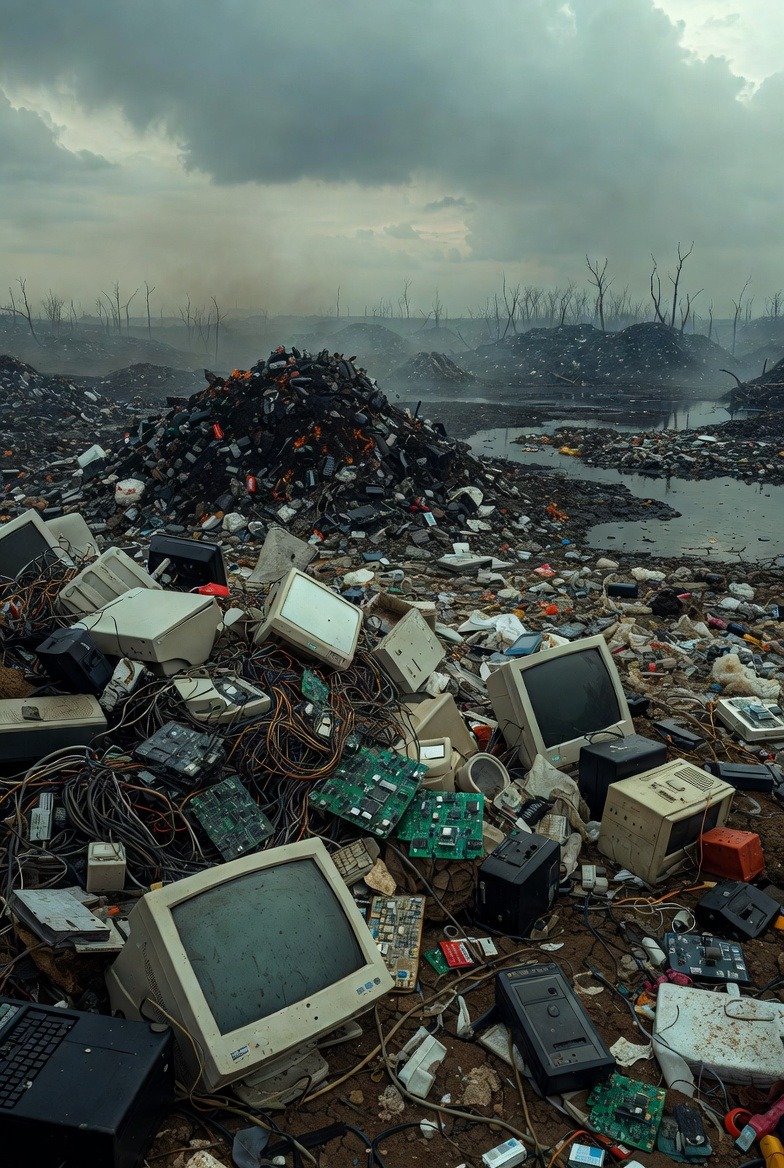
In our increasingly digital world, electronic devices—from smartphones and laptops to smartwatches and home automation systems—are part of everyday life. Yet, these conveniences come with a hidden cost: electronic waste, or e-waste. While it accounts for a small fraction of total waste, e-waste is one of the fastest-growing environmental threats, posing serious risks to both human health and the planet. Proper disposal practices are now more critical than ever.
The Scale of the E-Waste Problem
Globally, nearly 50 million tons of e-waste are generated each year, and less than 20% is responsibly recycled. The rest often ends up in landfills or informal processing yards, releasing toxic substances such as lead, mercury, cadmium, and arsenic into the environment. Lithium-ion batteries add another hazard due to their flammability.
E-waste is also a hidden treasure: devices contain precious metals like gold, silver, and palladium. For example, old smartphones have over 50 times more gold than traditional mined ore. Discarding these devices wastes valuable resources and contributes to unnecessary environmental damage.
Risks of Improper Disposal
Improper disposal of e-waste carries dual threats: environmental harm and data breaches. Many devices store sensitive personal or corporate data:
- Hard drives & computers – financial records, passwords, personal files
- Printers & copiers – scanned documents and internal memory
- Smart home devices & wearables – location, health data, or login credentials
- Biometric hardware – fingerprints or facial scans that cannot be changed once compromised
Without secure destruction, this information can be easily recovered, leading to identity theft, fraud, or corporate espionage.
Quick Risk Table
| Risk Type | Individuals | Organizations |
| Data & Identity | Identity theft, account compromise | IP theft, financial loss |
| Privacy | Exposure of personal messages/photos | Employee data leaks, legal claims |
| Financial | Fraudulent transactions | Operational disruption, ransomware attacks |
| Legal & Reputational | Stress, long-term recovery | Fines (HIPAA, GDPR, CCPA), reputational damage |
Best Practices for E-Waste Management
Professional e-waste handling follows a hierarchy: reuse → repurpose → recycle. Recycling (shredding and melting) is a last resort, used mainly when components cannot be salvaged. Certified recyclers not only recover valuable materials but also ensure secure data destruction.
Data Security Checklist
- Software-based wiping – overwriting data multiple times
- Degaussing – magnetic neutralization for hard drives
- Physical destruction – shredding or crushing storage media
- Thermal disintegration – burning devices at high temperatures
- Encryption – destroy keys alongside the device
Partnering with certified providers ensures proper handling. Platforms like RubbishGo.com.au provide a wide range of responsible electronic waste disposal services for both individuals and organizations.
The Role of Design in Reducing E-Waste
Many modern electronics are designed for rapid turnover: glued-in components, proprietary parts, and non-modular designs make repairs and recycling difficult. Innovators are challenging this model:
- Fairphone – modular phones with replaceable components
- Commown – electronics rental services emphasizing durability
These approaches show that longevity, repairability, and sustainability can be profitable and eco-friendly.
Quick Action Checklist for Individuals
Before upgrading to a new device:
- Repair or upgrade your current device instead of replacing it.
- Backup and securely wipe data on old devices.
- Use certified e-waste recyclers.
- Consider reselling or donating fully functional electronics.
- Prefer devices designed to last or support modular upgrades.
Supporting the Circular Economy
Responsible e-waste disposal preserves valuable metals and reduces the need for virgin mining. Refurbishing, reselling, and repairing electronics extends their lifecycle and transforms waste into a reusable resource. Organizations that follow these practices also improve ESG performance, demonstrating environmental and social responsibility to stakeholders.
Conclusion
Electronic waste is more than clutter—it is a silent threat in every home, office, and landfill. Each responsibly handled device protects ecosystems, secures sensitive data, and contributes to a sustainable future. By repairing, reusing, and choosing certified disposal services, we can reduce the ecological footprint of technology while safeguarding our digital legacy.