
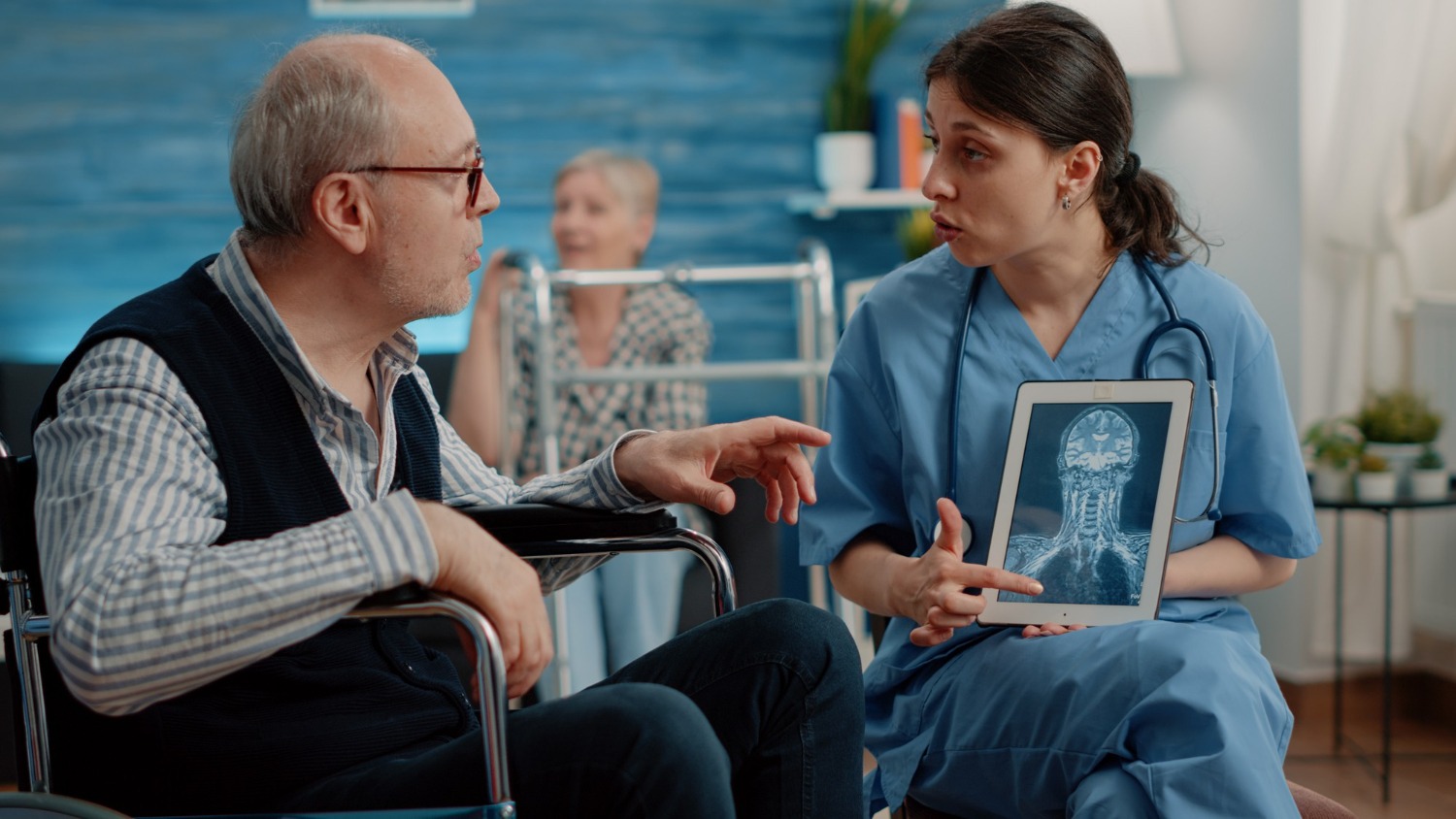
One of the most important — and often overlooked — factors in stroke recovery is which hemisphere of the brain was affected. Because the two hemispheres divide their responsibilities in very specific ways, a stroke on the left produces a fundamentally different set of challenges than a stroke on the right. For families and caregivers navigating the recovery process, understanding this distinction can change everything: which therapies to prioritize, which milestones to expect, and how to provide support day to day.
For families navigating this at home, finding caregivers who understand hemispheric differences — not just general stroke care — is a meaningful distinction. The deficits a left-brain survivor faces demand a completely different daily approach than those of someone who had a right-hemisphere stroke. Improvised caregiving, however well-intentioned, rarely accounts for that specificity. Specialists like Care Mountain approach recovery with that level of precision, which is why consistent professional support tends to outperform improvised family caregiving in long-term outcome studies.
Left-Brain Stroke: When Language Is Lost
The left hemisphere governs language, sequential reasoning, and analytical thinking. It also controls movement on the right side of the body. When a stroke strikes here, the consequences are often immediately visible — and deeply disorienting.
Aphasia: The Most Misunderstood Symptom
Aphasia is the most common and most distressing outcome. Depending on which area is damaged, a survivor may lose the ability to produce speech, to understand what others are saying, or both. This is frequently misread by family members as confusion or cognitive decline. When in reality the person’s comprehension and intelligence may be entirely intact they simply cannot access the words.
Physical and Emotional Impact
Right-sided weakness accompanies the language deficits in most cases. For the majority of survivors, this means the dominant hand is affected, disrupting basic self-care, handwriting, and fine motor tasks from the very first day.
Post-stroke depression is also significantly more common after left-hemisphere strokes. It has a neurological component — not just a psychological one — and when left untreated it measurably slows both language and motor recovery. Screening for depression in this group is a clinical priority, not an optional step.
Rehabilitation Priorities
Therapy for left-brain stroke leans heavily on speech-language intervention, started as early as medically safe. Constraint-induced movement therapy — which restricts use of the stronger limb to force the affected hand back into active use — is one of the most evidence-supported tools during the critical early recovery window.
Right-Brain Stroke: The Challenge No One Sees Coming
Right-hemisphere strokes can seem deceptively mild at first, precisely because language remains intact. Survivors often insist they feel completely fine. This is not reassurance — it is itself a symptom. The right brain regulates spatial awareness, self-monitoring, and emotional tone. When it is damaged, awareness of the damage tends to disappear along with everything else.
Hemispatial Neglect
The most striking consequence is left-sided neglect. A survivor may eat only the food on the right half of their plate, dress only the right side of their body, and walk directly into objects on their left — not because they cannot see them, but because the brain no longer directs attention there. This is an attentional deficit, not a visual one, and it requires specific perceptual retraining to address.
Safety, Impulsivity, and Emotional Changes
Impulsivity and poor safety judgment are equally common. A right-hemisphere stroke survivor may attempt to stand, walk, or even drive long before it is safe, with genuine confidence that they are capable. Caregiver supervision in this group is not optional — it is a primary safety intervention.
Emotionally, right-hemisphere survivors often present with a flat affect, speaking in monotone and struggling to convey or read emotional cues in others. Families sometimes interpret this as depression or indifference. It is usually neither — it is a neurological change in how emotion is processed and expressed, and it responds differently to treatment.
Rehabilitation Priorities
Prism adaptation therapy, visual scanning training, and limb activation tasks all show evidence-based results for neglect. Family education is equally important: caregivers must learn to approach from the unaffected side, organize the environment to reduce left-side hazards, and supervise high-risk activities consistently.
Recovery Timeline: What Both Groups Share
Regardless of hemisphere, stroke recovery follows a recognizable pattern. The first three months represent the period of greatest neuroplasticity — when the brain’s capacity to reorganize and compensate is at its peak. High-intensity, task-specific therapy during this window produces disproportionate gains compared to later intervention.
After three months, recovery slows but does not stop. Research consistently shows that meaningful improvement continues for years after stroke, particularly with sustained therapeutic input. The older clinical consensus that recovery plateaus at six months has been substantially revised.
Caregiver involvement is one of the strongest predictors of long-term outcome across both hemispheres. Home-based support when it comes from trained professionals rather than well-meaning family members improvising their approach bridges the gap between inpatient rehabilitation and sustainable daily function. Specialist home caregivers experienced in post-stroke care provide the kind of consistent, knowledgeable support that makes a measurable difference in outcomes over time.
What Determines How Far a Survivor Can Go?
Hemisphere is one variable in a much larger equation. Age, stroke severity, time from symptom onset to treatment, and the survivor’s baseline cognitive and physical health all interact to shape the final recovery trajectory. No single factor is destiny.
What the research does confirm is that the deficits each side produces have different ceilings and different timelines. Language recovery after left-hemisphere stroke can plateau earlier and remain incomplete in severe aphasia cases. Right-hemisphere neglect, if untreated, can persist indefinitely and continue posing safety risks long after discharge. But both groups contain survivors who far exceeded early prognoses typically those who received early, intensive, well-matched rehabilitation and consistent caregiving support at home.
For a detailed clinical comparison of outcomes across both hemispheres — covering motor, cognitive, and psychosocial domains this guide is a valuable reference for anyone building a rehabilitation plan.
Practical Notes for CaregiversSupporting a Left-Hemisphere Survivor
Slow down communication. Allow extra processing time before expecting a response. Use gesture, pictures, and simple yes/no questions to reduce frustration. Celebrate every recovered word — language gains, even small ones, are neurologically significant and deserve to be acknowledged.
Supporting a Right-Hemisphere Survivor
Never assume that the absence of complaint means the absence of risk. Establish consistent daily routines, reduce clutter on the left side of living spaces, and supervise mobility even when the survivor confidently resists it. Structure compensates for what the damaged hemisphere no longer provides automatically.
Protecting the Caregiver
In both cases, caregiver burnout is the most preventable threat to long-term recovery. A depleted caregiver cannot sustain the frequency and quality of interaction that neuroplasticity requires. Seeking professional support early — before exhaustion sets in — protects both the survivor and the person caring for them.
Disclaimer
The information provided in this article is intended for educational and informational purposes only and is not a substitute for professional medical advice, diagnosis, or treatment. Stroke recovery is highly individualized, and outcomes vary depending on multiple factors, including the location and severity of the stroke, pre-existing health conditions, and the timing and intensity of rehabilitation. Readers should not rely solely on the information presented here to make decisions regarding care or treatment. Always seek the guidance of a qualified healthcare professional, neurologist, or licensed therapist for personalized medical advice and before starting any rehabilitation program. The authors and publishers of this content are not responsible for any health consequences resulting from reliance on this information.