
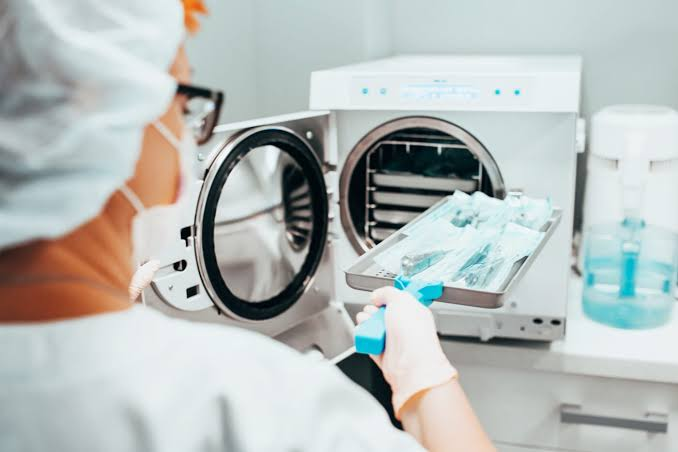
The short answer: the package does the work. For a sterile device, the packaging is not a wrapper you throw away. It is an engineered barrier built to keep microbes out from the moment the device is sealed until a clinician opens it at the bedside, sometimes years later. Get that barrier right and no one thinks about it. Get it wrong and the product comes off the market. Here is how that actually works.
What makes medical packaging different from a cereal box?
A cereal box keeps food fresh. A sterile barrier system keeps a device sterile, which is a much harder promise to keep and a much higher one to prove. The package has to survive sterilization, whether that is high-heat steam, radiation, or ethylene oxide gas. It has to hold up through shipping, temperature swings, and years on a shelf. And it has to open cleanly in an operating room without shedding particles into a sterile field. A seal that is too weak can breach in transit. A seal that is too strong can tear on opening and defeat the whole point. Engineers spend real effort landing in the narrow band between those two failures.
How do you prove a sterile barrier actually works?
You do not take it on faith. The international standard, ISO 11607, sets the rules. Part 1 covers the materials and the sterile barrier system itself. Part 2 covers validating the forming and sealing processes that produce it. The FDA recognizes both as consensus standards and backs them with its own container closure integrity guidance. Proving a package works means testing seal strength, running integrity tests that can detect a leak too small to see, and aging the package both in real time and in an accelerated oven to model years of shelf life. Real-time aging cannot be rushed, which is one reason this work takes the time it does.
What happens when a company opens a new packaging site?
This is where the abstract gets concrete. When a sterile packaging manufacturer runs out of capacity and builds a second facility, every line at the new site has to be validated from scratch, and often against fixed customer audit and regulatory dates that will not move.
Network Partners Group worked one of these. A sterile packaging manufacturer was maxed out at its original plant while a new facility came online under a hard deadline. NPG embedded two packaging engineers on site, led by a Six Sigma Master Black Belt, to replicate the existing lines. They ran gap assessments against the original site protocols, built a validation road map for each equipment and material combination, and generated the design-of-experiments, process failure analyses, and test method validations under the client quality system. The measurable result is the part worth remembering. Every line passed validation and customer trials on schedule, the customer and regulatory audits closed with zero critical findings, and the manufacturer held 100 percent on-time delivery to its own customers straight through the transition. That is what “the package is part of the product” looks like in practice.
Why does a small packaging change trigger so much work?
Because a validated sterile barrier is a proven system, and any change can invalidate the proof. Swap a film supplier, adjust a sealing temperature, or move a line to a new building, and you usually have to revalidate under ISO 11607-2. It feels heavy for what looks like a minor tweak. But the alternative is shipping a change you have not proven, and in a sterile product that is how recalls start.
Frequently asked questions
Is medical device packaging regulated as strictly as the device? Effectively, yes. For a sterile device the package maintains the sterility the device depends on, so it falls under the same quality system and the ISO 11607 framework.
What is a sterile barrier system? It is the packaging that maintains sterility from sterilization through the point of use, the sealed pouch or tray plus its closure, validated to keep microbes out.
How long can a sterile package stay sterile? As long as its validated shelf life, which the manufacturer has to prove with real-time and accelerated aging data, not simply claim.
Who does this work? Larger manufacturers keep packaging engineers on staff. Many bring in specialists such as packaging engineering support from Network Partners Group for site launches, validations, and capacity surges, where the work is intense but not permanent.
 AdpharmaConsultant