
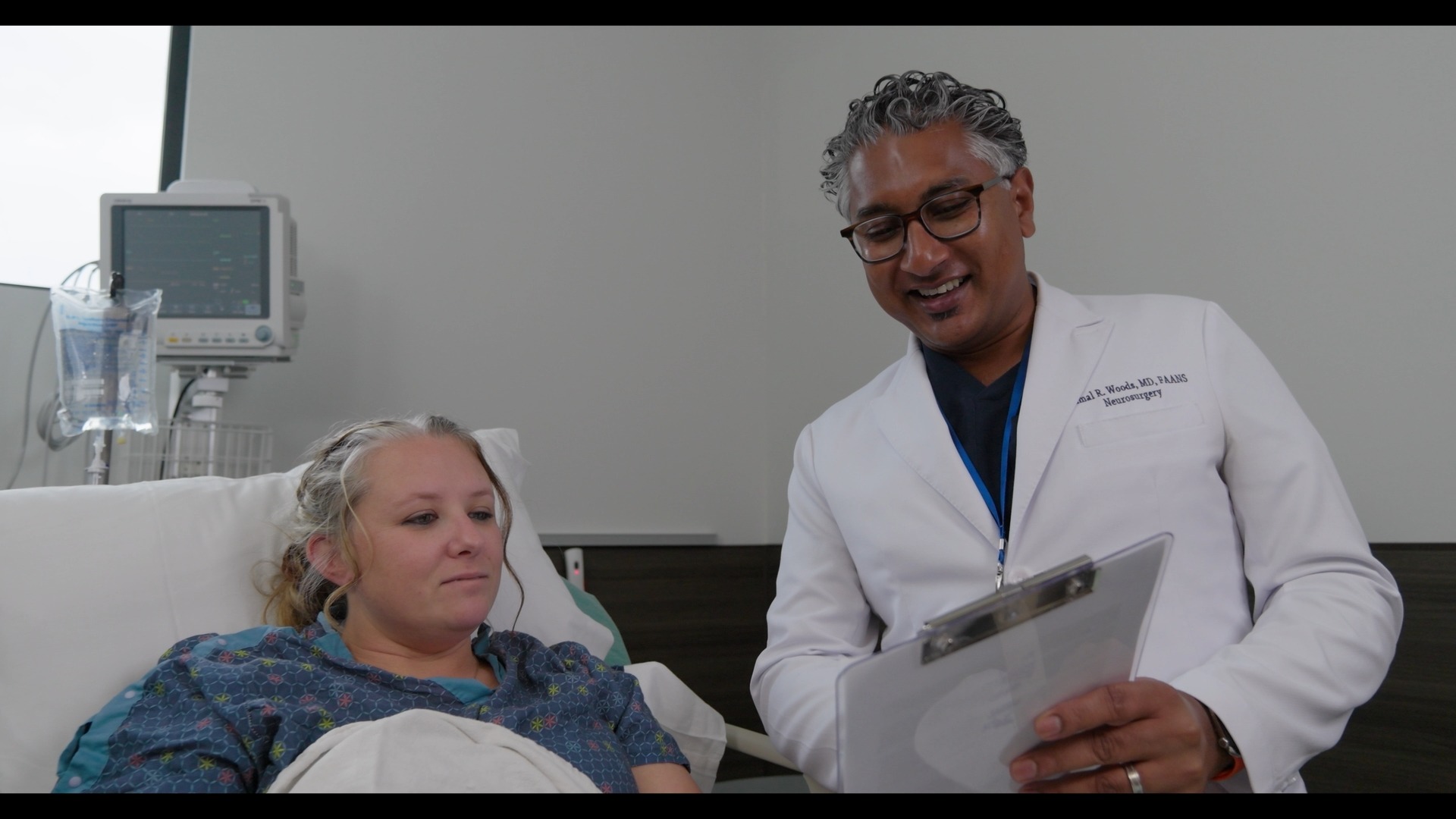
Modern spine care is increasingly shaped by a combination of specialized training, precise imaging, minimally invasive techniques, robotic guidance, and individualized decision-making. At Vertrae® in Miamisburg, Ohio, Kamal R. Woods, MD, MBA, FAANS, has built a professional profile around that intersection. He is a board-certified neurosurgeon, founder of Vertrae® and Vertrae® Surgery Center, and a physician whose work includes conservative spine care as well as advanced surgical options.
His biography reflects a broader shift in medicine: technology works best when it supports clinical judgment rather than replacing it.
Advanced Training Built a Broad Foundation for Spine Care
Dr. Woods completed neurosurgery residency training at Loma Linda University Medical Center and advanced spine training at Cedars-Sinai Medical Center in Los Angeles. Vertrae® describes his fellowship background as combining orthopedic and neurosurgical spine disciplines, giving him experience that crosses two perspectives commonly involved in complex spine treatment.
He is certified by the American Board of Neurological Surgery and holds the FAANS designation as a Fellow of the American Association of Neurological Surgeons. He also earned an MBA from Johns Hopkins Carey Business School, adding formal business and leadership education to his medical background.
Vertrae®: Kamal Woods, MD, MBA, FAANS presents his work within a comprehensive spine-care model that includes evaluation, conservative treatment, physical therapy, injections, and surgical care when appropriate.
That range matters because similar symptoms can arise from different conditions. Training provides the foundation, but diagnosis still depends on the individual.
Robotic Guidance Adds Precision Without Replacing the Surgeon
Robotic-assisted spine surgery is one of the clearest technology themes in Dr. Woods’ current practice. Vertrae® describes robotic guidance as combining imaging, navigation, and a robotic platform to support planning and instrument placement during selected procedures.
The technology does not independently decide what operation should be performed. Dr. Woods remains responsible for diagnosis, patient selection, surgical planning, and the procedure itself. Robotic tools are used to help translate a carefully developed plan into precise movements based on the patient’s anatomy.
This distinction is important because “robotic surgery” can sound more automated than it really is. In modern spine care, the surgeon still directs the operation. The technology functions as a sophisticated guidance system rather than an autonomous replacement for clinical judgment.
Minimally Invasive Techniques Reflect a Changing Surgical Model
Vertrae® also identifies minimally invasive spine surgery as a central part of Dr. Woods’ clinical approach. These procedures use smaller incisions and specialized instruments to reach the spine while limiting disruption to surrounding muscles and tissues compared with traditional open approaches.
Depending on the condition, minimally invasive techniques may be used alongside navigation, microscopes, tubular retractors, or robotic assistance. Vertrae® also lists procedures such as disc replacement, spinal fusion, SI joint fusion, and spinal cord stimulation among available treatment options.
The presence of advanced procedures does not mean surgery is always the first answer. Vertrae® states that conservative care remains an important part of its philosophy, with surgery considered when it adds value for the individual patient.
Motion Preservation Expands the Conversation Around Treatment
Another part of Dr. Woods’ professional profile is an interest in motion-preserving spine care. Vertrae® discusses disc replacement and a broader philosophy of preserving movement when clinically appropriate rather than assuming fusion is the only surgical pathway.
Disc replacement is not suitable for every person or diagnosis. Anatomy, spinal level, degeneration, instability, symptoms, and previous treatment can all influence whether a motion-preserving option is reasonable.
Dr. Kamal Woods is presented as a surgeon who combines newer technology with a full spectrum of care, allowing treatment decisions to be based on the condition rather than on a single preferred procedure.
Having more options can make careful patient selection even more important. Innovation is most useful when it creates appropriate choices, not when it encourages technology to drive the diagnosis.
Leadership and Business Education Add Another Dimension
Dr. Woods’ MBA from Johns Hopkins Carey Business School adds an organizational component to his biography. Vertrae® identifies him as the founder of both its comprehensive spine practice and outpatient surgery center, placing him in roles that extend beyond direct clinical care.
Healthcare leadership involves decisions about staffing, patient flow, technology adoption, safety processes, communication, and long-term strategy. Business education does not replace surgical training, but it can provide a different framework for managing the systems surrounding patient care.
His official materials also describe involvement in research, professional publications, and innovation related to spine technology. Together, those activities show a career that extends beyond direct clinical practice within a changing healthcare environment.
Patient Communication Remains Central as Technology Advances
Advanced technology can make surgery more precise, but patients still need clear explanations. Vertrae® emphasizes listening to patient goals, explaining options, and personalizing care rather than treating everyone with the same pathway.
That matters because spine treatment can involve difficult choices. A patient may need to compare physical therapy, injections, continued observation, minimally invasive surgery, disc replacement, or fusion. Understanding why one option is recommended is just as important as knowing that the technology exists.
Dr. Woods’ professional profile therefore combines technical and human elements. Robotics, minimally invasive methods, and motion-preserving approaches may expand treatment possibilities, while communication helps patients understand when those tools do or do not fit their situation.
Innovation Matters Most When It Supports Individualized Care
Dr. Kamal Woods’ biography brings together board-certified neurosurgical training, advanced spine fellowship experience, business education, practice leadership, minimally invasive surgery, robotic guidance, and an interest in motion-preserving treatment. Those elements create a distinctly modern professional profile, but the technology is only one part of the story.
The larger theme is integration. Conservative care can come before surgery. Robotic guidance can support a surgeon’s plan without replacing judgment. Minimally invasive techniques can offer different surgical routes for selected patients. Leadership can shape how the overall care environment is organized.
For patients, the most useful questions remain straightforward: What is causing the symptoms? Which treatments are reasonable? Why is one option recommended over another? What are the risks, alternatives, and expected recovery?
Modern spine care is strongest when innovation makes those answers clearer rather than more complicated. Dr. Woods’ biography reflects an approach in which advanced tools, specialized training, and patient-centered communication work together to support treatment decisions based on the person, the diagnosis, and the goals of care.
 AdpharmaConsultant