
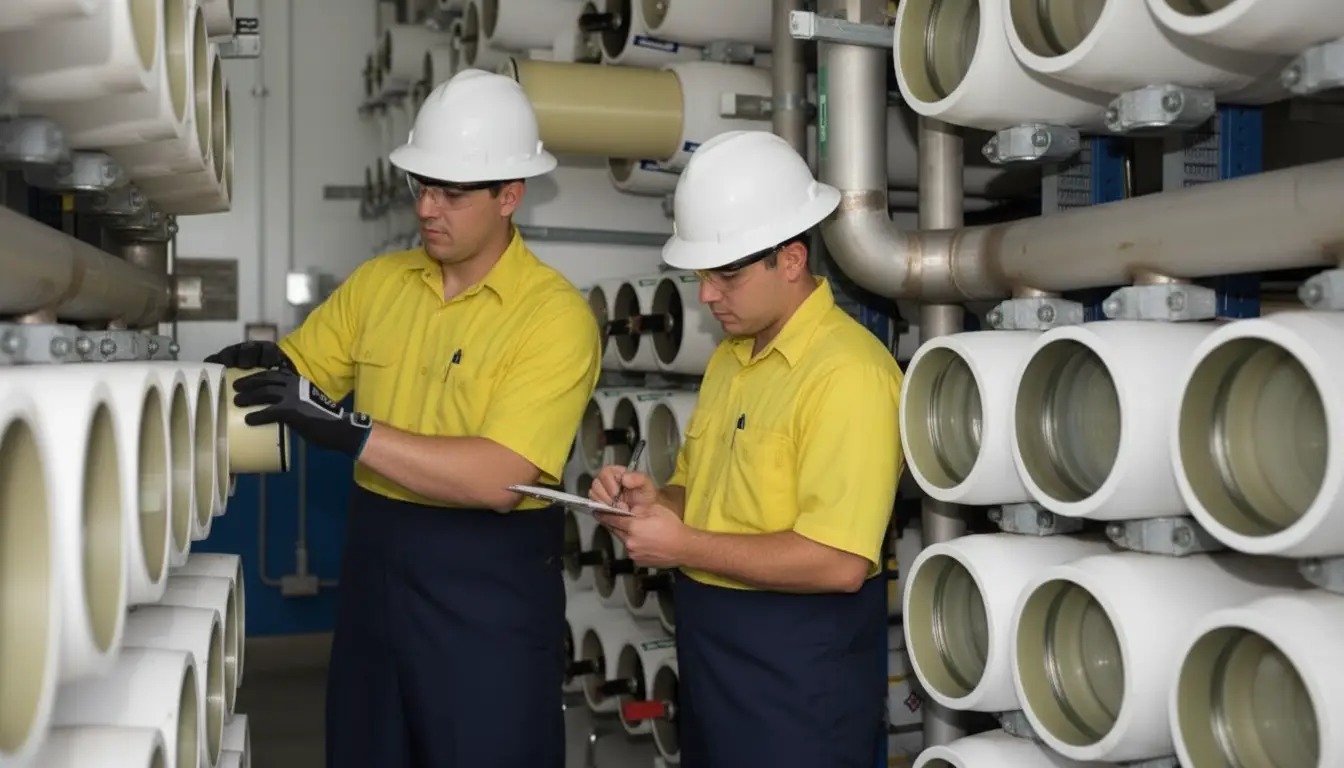
Water quality represents the most important factor which controls lifespan of reverse osmosis (RO) membranes within industrial and commercial water treatment networks. Within the UAE’s diverse water environment consisting of brackish groundwater and seawater as well as reuse water samples diverse water quality differences affect membrane durability differently. Real system design and proper membrane selection depend on experienced RO membrane suppliers in UAE together with professional water treatment companies in UAE. The knowledge of RO membrane lifespan effects from water quality allows users to guarantee dependable water treatment system operation.
Understanding RO Membrane Lifespan
Normal operating conditions allow industrial RO membranes to function for three to five years. Extreme cases of poor feed water quality cut this functional time span substantially. The design of RO membranes enables dissolved salt removal, but suspended solids and organics and biological growth and chemical oxidants remain highly damaging to these membranes. When untreated or poorly treated feed water flows through systems continuously it speeds up membrane fouling and scaling and chemical degradation that leads to premature membrane damage.
Total Dissolved Solids (TDS) and Salinity Levels
Higher total dissolved solids levels create greater osmotic pressure that pushes RO system operations toward higher pressure. The greater stress on the membranes leads to faster degradation and greater system energy usage. Brackish and seawater sources throughout the UAE demand membranes that have been engineered for operation in high salinity environments. RO membrane suppliers in UAE assess TDS levels to propose membranes which resist rapid performance degradation in long-term applications.
Suspended Solids and Turbidity
Membrane surfaces undergo physical fouling when suspended solids made of sand as well as silt and clay particles pass through the system. The suspended solid particles block membrane pores which decrease permeate flow and increase differential pressure throughout the system. Membrane lifespan experiences severe reductions when high turbidity feed water enters untreated into the system. Water treatment companies in UAE use professional expertise to create pre-treatment systems which eliminate suspended solids ahead of the RO membranes.
Organic Matter and Biofouling
Organic components with oils and biological elements facilitate biofouling which represents the worse membrane-related fouling groups. Biofouling produces an impossible-to-eliminate slimy surface layer needing harsh chemical removal procedures to eliminate. Uncontrolled biofouling may cause membrane life reduction of various years duration. Understanding RO membrane suppliers in UAE requires selection of biological resistant membranes and proper surface treatment to minimize biological development.
Hardness and Scaling Compounds
RO membranes sustain scaling damage from calcium magnesium sulfate and silica which produce water hardness. Membrane efficiency drops and water pathways become blocked due to the hard deposits of crystalline scale. Severe scaling produces irreversible damage which dramatically reduces the functional life of membranes. Membrane protection needs expertise from water treatment companies in UAE which provide softening or anti-scalant control solutions through proper dosing.
Iron, Manganese, and Heavy Metals
Groundwater commonly contains iron and manganese however these minerals create significant damage to RO membranes. The oxidized metals generate permanent fouling when they build up on membrane surfaces. Even minute amounts of these metals cause membrane failure if pre-treatment does not remove them. RO membrane suppliers in UAE deliver operational systems that incorporate solutions for dealing with these specific contaminants.
Chlorine and Oxidizing Agents
Most modern industrial RO membranes, including thin film composite membranes remain vulnerable to damage from both chlorine and oxidants. Extended contact with the active layer of the membrane reduces its salt rejection capability and leads to eventual system failure. The use of activated carbon filtration in addition to chemical dichlorination remains necessary for proper system functionality. Standard procedure for any water treatment company in UAE includes this protective technique.
PH Variations and Chemical Stability
RO membranes show decreasing strength after extended exposure to feed water with extreme pH levels. Many years of use reveal that RO membranes process specific pH levels during operation and cleaning, however sustained pH extremes lead to structural compromise. Chemical control of pH stability promotes extended membrane life.
Impact on Used RO Membranes
Aquifers supplied through used SG membranes in UAE demand rigorous water quality control methods. Poor water quality will rapidly destroy membranes that have already lost their full operational capacity because of prior use. Reuse of used membranes requires either secondary applications or non-critical purposes along with thorough water analysis and testing of system performance.
Role of Pre-Treatment in Extending Membrane Life
Pre-treatment systems work as essential first line protective systems that stop water quality damage to membranes. Pre-treatment removes harmful water contaminants before feed water reaches the RO membrane to extend system lifespan substantially. Multi-stage filtration validations together with routine chemical dosing and persistent monitoring are necessary. UAE leading water treatment companies provide pre-treatment customization based on analysis of local water conditions.
Importance of Continuous Water Quality Monitoring
Water quality levels shift over seasons and as sources change and during operational changes within systems. Monitoring turbidity and SDI as well as TDS and chlorine levels and metal content in continuous fashion allows operators to detect upcoming problems at early stages. Monitoring in advance maintains steady operational performance because it stops the progression of irreversible membrane damage.
Conclusion
The durability of an RO membrane depends entirely on how well water quality remains under control. Membrane degradation occurs faster through high salinity content and suspended solids and organics and hardness and metals and chemical oxidants when the water quality remains uncontrolled. In the tough water conditions of the UAE accurate water assessment together with solid pre-treatment systems and expert system engineering leads to extended membrane durability. A coordinated partnership between reputable RO membrane suppliers in UAE with used RO membrane suppliers in UAE and professional water treatment companies in UAE helps protect RO membranes and decrease operational expenses and sustain water treatment operations.
Frequently Asked Questions (FAQs)
1. What water quality parameter has the biggest impact on RO membrane lifespan?
Scaling and suspended solid contaminants instantly impact membrane lifespan because they rapidly produce fouling alongside permanent damage if not controlled.
2. Can poor water quality permanently damage an RO membrane?
Prolonged exposure to chlorine and heavy metals or severe scaling conditions will cause permanent damage to an RO membrane that cannot be recovered.
3. How does water quality affect used RO membranes?
RO membranes that have been previously used have increased sensitivity to water quality and require properly treated feed water in non-critical situations.
4. Why is pre-treatment essential for extending RO membrane life?
The pre-treatment process eliminates the materials that cause membrane fouling and scaling and chemical degradation yet accomplishes considerable membrane lifespan extension.
5. How can RO membrane suppliers in UAE help improve membrane lifespan?
They examine feed water characteristics and select suitable membranes and offer operational technical support to maintain UAE system requirements.
 John
John